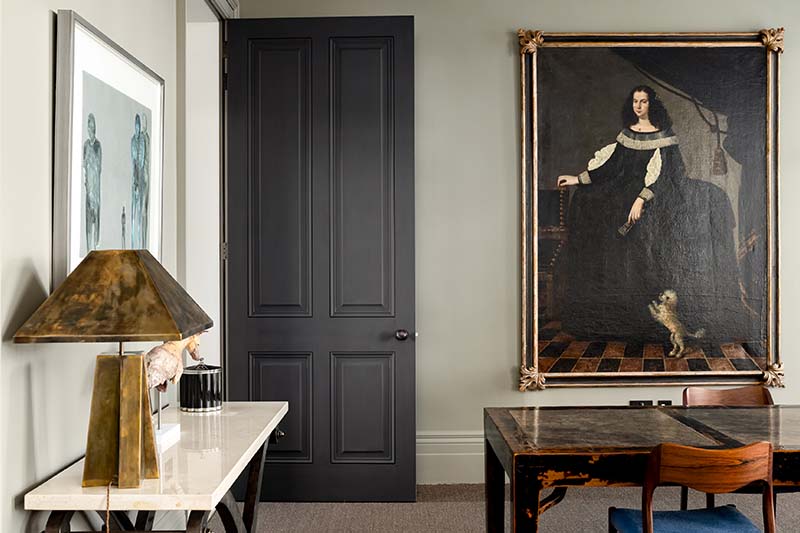
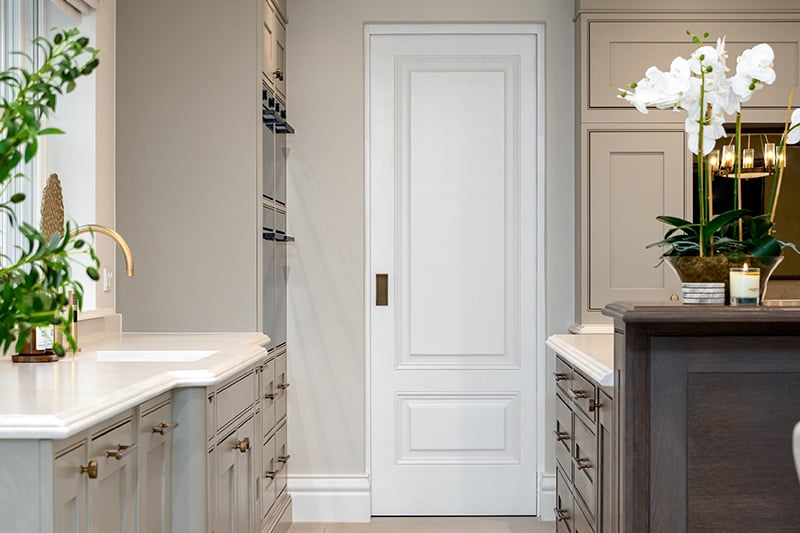
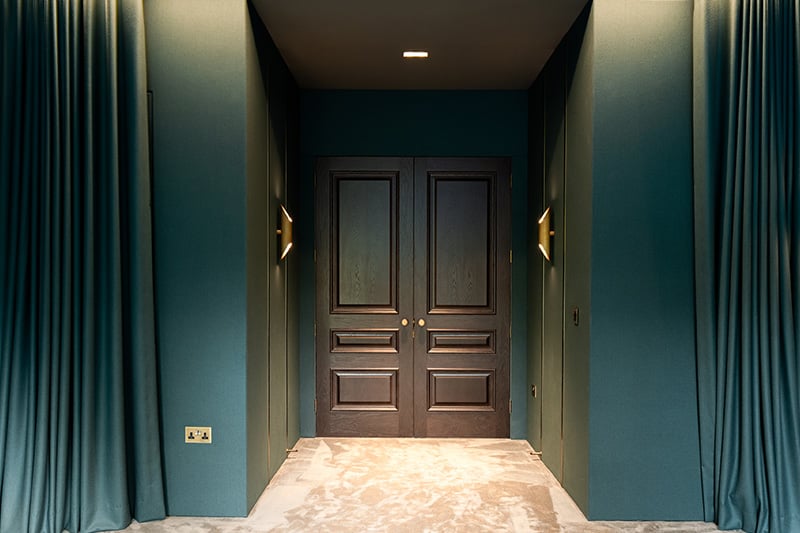
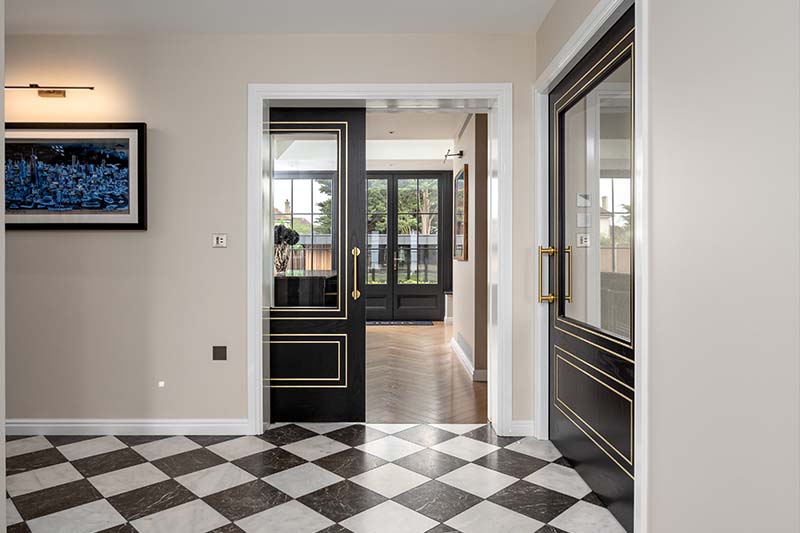
Metallic finishes are becoming an increasingly popular choice for luxury interiors, adding depth, texture and understated drama to bespoke internal doors. Below, we answer the most common questions we’re asked about Denleigh’s metallic finishes — from how they’re made to how best to use them in your space.
1. What are metallic finishes?
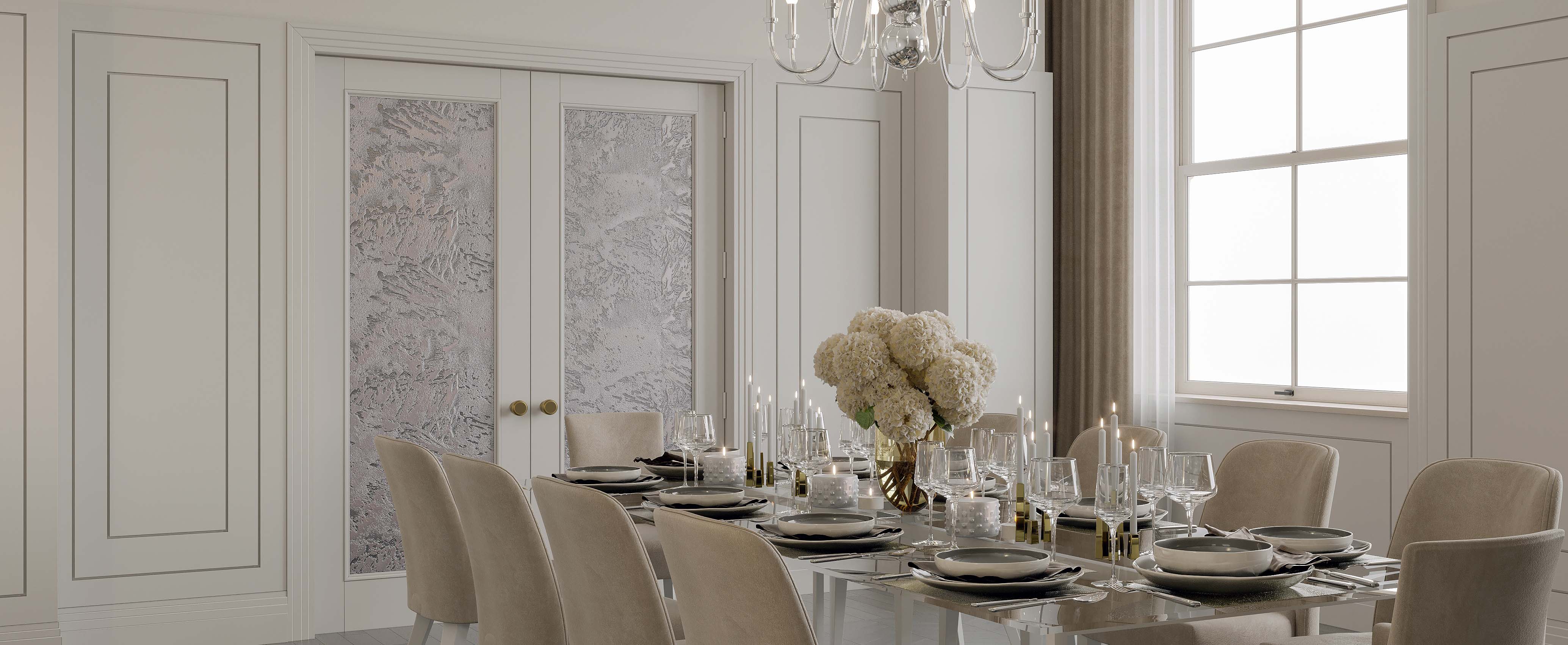
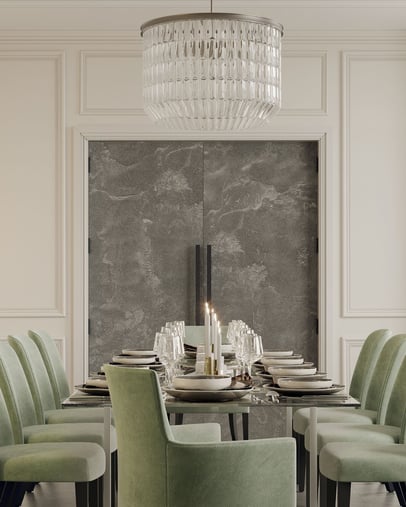
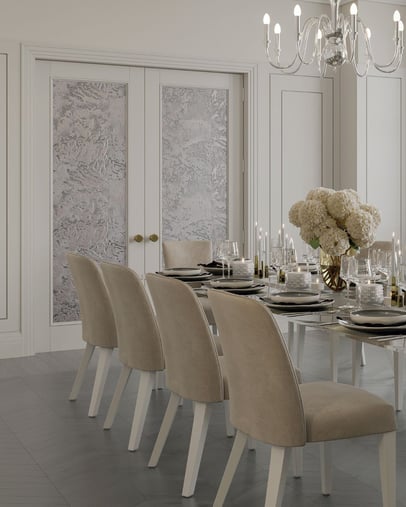
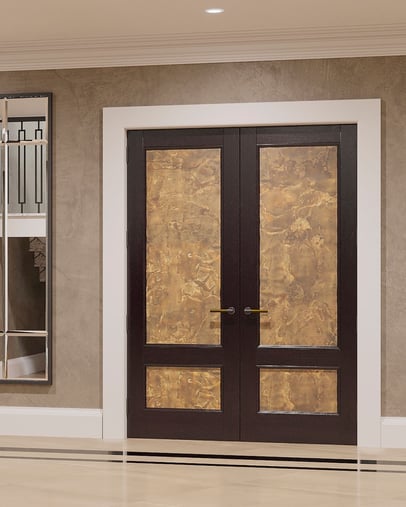
Metallic finishes are specialist surface treatments that introduce subtle sheen, texture and tonal variation to bespoke doors. Rather than appearing flat or uniform, these finishes interact with light, creating movement and visual interest throughout the day.
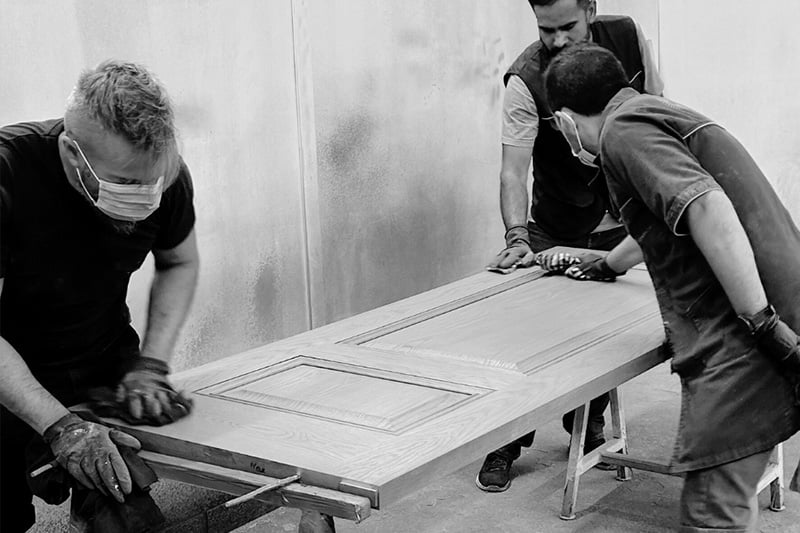
At Denleigh, our metallic finishes are hand-applied and designed to enhance the craftsmanship of each door, transforming it into a design feature rather than simply a functional element.
2. How are Denleigh’s metallic finishes different from standard painted finishes?
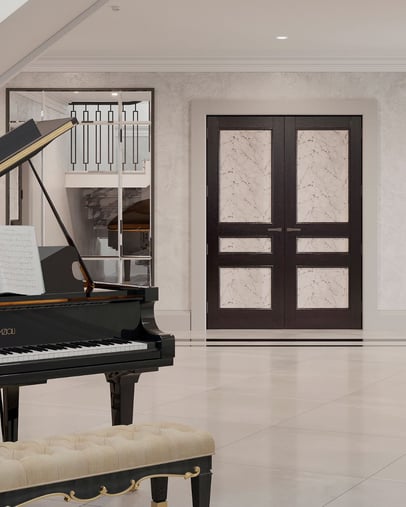
Unlike conventional paint, metallic finishes are layered and textured, resulting in a surface that feels rich, tactile and dimensional.
Each finish is individually applied using artisanal techniques, meaning no two doors are exactly the same. This approach delivers a depth and character that can’t be replicated with mass-produced coatings — ideal for high-end residential and design-led projects.
3. What textures are available?
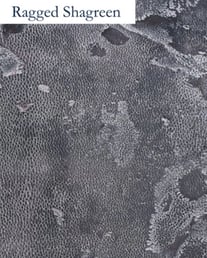
Our metallic finishes draw inspiration from organic forms and natural processes, offering a range of distinctive textures:
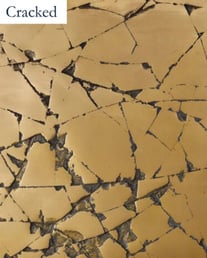
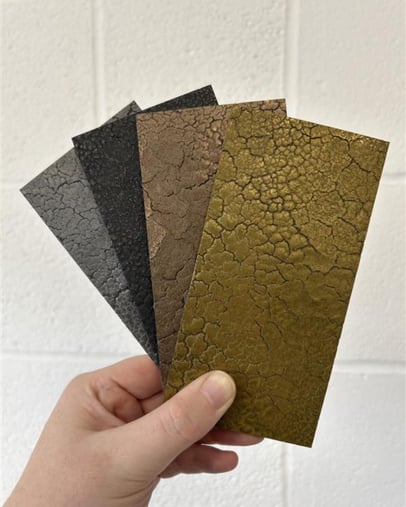
- Cracked – Inspired by dried earth, celebrating natural imperfections and contrast
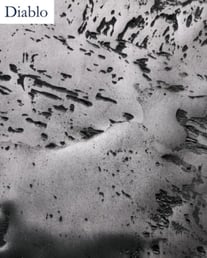
- Diablo – A dramatic, fluid texture reminiscent of molten metal
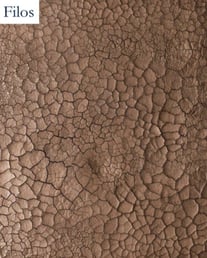
- Filos – Fine linear detailing inspired by natural vein patterns
- Ragged Shagreen – A richly tactile finish with a softly irregular surface
Each texture creates a different mood, from bold and expressive to subtle and refined.
4. Which metallic colours can I choose from?
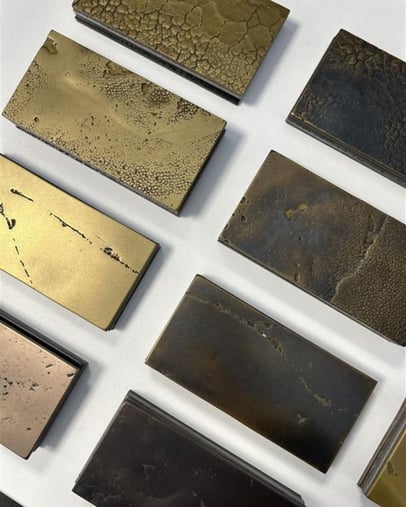
Denleigh offers a curated palette of metallic tones, designed to complement both classic and contemporary interiors:
- Brass – Warm, timeless and elegant
- Bronze – Deep and characterful with a sense of heritage
- Pewter – Soft, understated and modern
- Iron – Strong, raw and architectural
These tones work beautifully with a wide range of materials, including timber flooring, stone, plaster and glass.
5. What surface treatments are available?
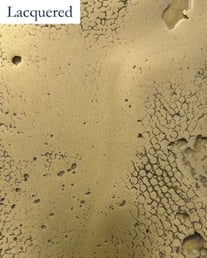
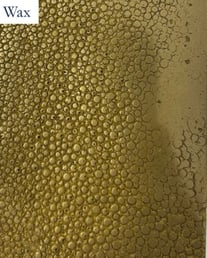
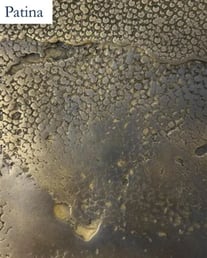
Metallic finishes can be further refined with different surface treatments to suit both aesthetic preference and practical requirements:
- Lacquered – Smooth, sealed and durable with a subtle sheen
- Waxed – Softens the surface while enhancing warmth and tactility
- Patinated – A living finish that evolves, developing depth and character
Each option influences how the finish ages and interacts with light.
6. Where do metallic finishes work best in the home?
Metallic finishes are ideal for areas where you want to introduce visual interest without overwhelming the space, such as:
- Entrance halls and corridors
- Living rooms and dining spaces
- Home offices or libraries
- Feature doors within open-plan layouts
They can be used sparingly as a focal point or repeated throughout a scheme for a cohesive design language.
7. How do metallic finishes interact with light?
Light is a key part of what makes metallic finishes so effective.
Natural and artificial light highlights the texture and tonal variation, meaning the door subtly changes in appearance throughout the day. Layered lighting — ambient, accent and feature lighting — helps bring out the full depth of the finish.
8. Can metallic finishes be matched with door hardware?
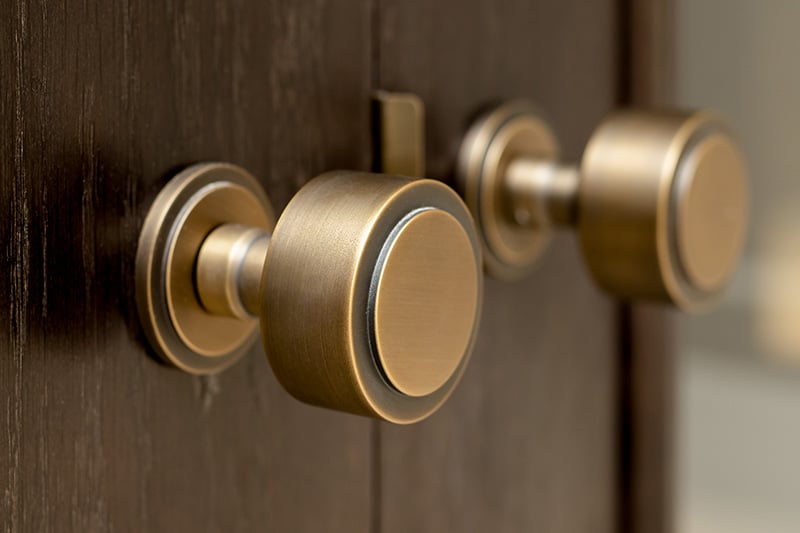
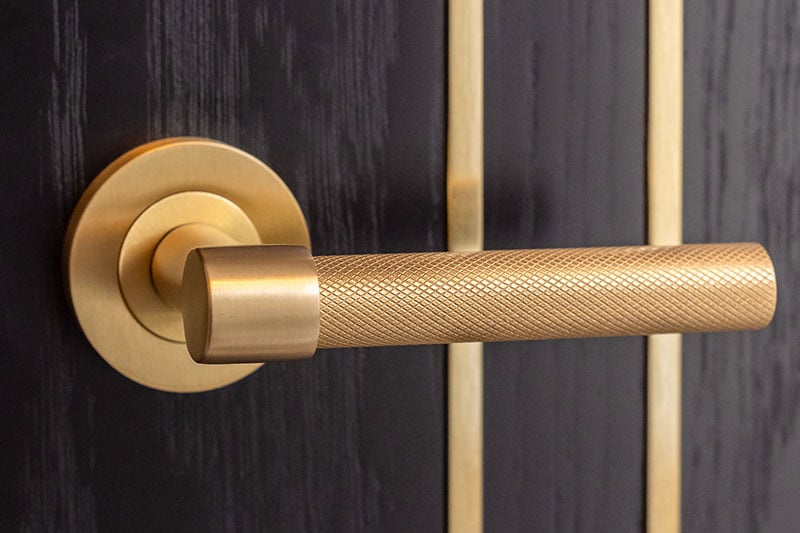
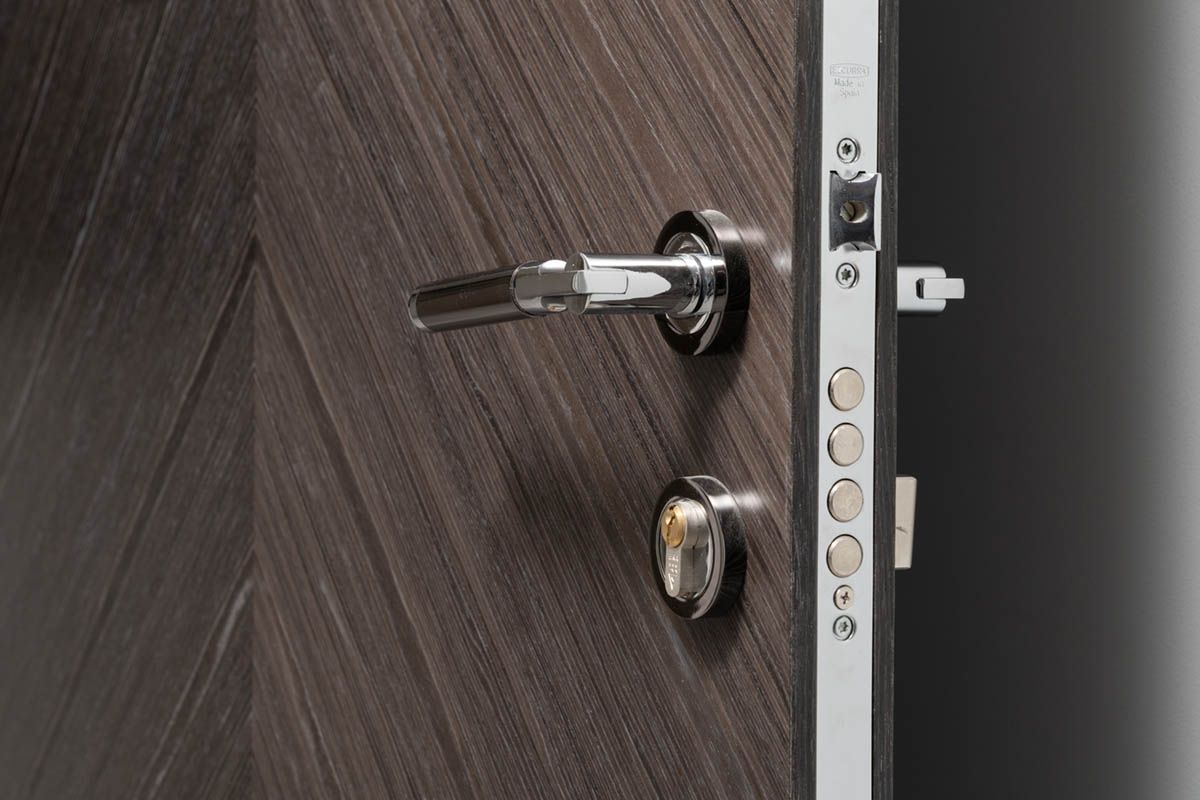
Absolutely. Metallic finishes pair beautifully with complementary ironmongery, such as satin brass, bronze or pewter hardware.
Coordinating door finishes with handles, hinges and other details helps create a cohesive, considered interior scheme and elevates the overall design.
9. Are metallic finishes durable?
Yes. While visually expressive, metallic finishes are designed for everyday use. Protective surface treatments help maintain their appearance while allowing the material's character to shine through.
Your choice of finish and treatment can be tailored to suit the level of use and the environment in which the door will sit.
10. Can I see samples before committing?
Yes — viewing samples is highly recommended. Because metallic finishes rely on texture, tone and light interaction, seeing them in person is the best way to understand their impact and choose the right option for your project.
Supporting Your Project from Material to Finish
At Denleigh, our metallic finishes are just one expression of our wider approach to materials — carefully sourced, expertly crafted and always chosen with longevity in mind. From specialist surface treatments to bespoke door construction, every detail is considered. If you’re exploring a project and would like to discuss materials, finishes or design possibilities, our team is always happy to help and advise.